If you drove down Riverside Road this summer with folding chairs in the trunk and a cooler in the back seat, out of habit more than anything else, you found a construction fence where the stage used to be. Riverside Sounds, the free outdoor concert series that has drawn crowds to the banks of the Chattahoochee for years, did not happen in 2026, and by the city's own calendar it stays paused until the park itself reopens. The question worth asking is not whether that's a loss. It's where Roswell's Friday nights actually went this summer while the river sits under construction, and whether the answer says something about how this city works that the empty park itself doesn't.
What Actually Closed, and Why
Riverside Park shut its gates at dusk on February 1, 2026, ahead of a $13.8 million renovation that the city describes as the most significant investment yet in its River Parks Master Plan. The Roswell City Council awarded a $12.3 million construction contract to the firm MAPP on December 8, 2025, followed by a groundbreaking ceremony held at the park on March 13, 2026. Landscape architecture firm Starr Whitehouse designed the overhaul, which calls for a new open-air pavilion, an upgraded bandstand, ADA-accessible restrooms, a nature-inspired playground, and a free sprayground to replace the one that closed with the rest of the park.
The number that puts the project in perspective is the tree count. Getting the new layout right required removing 221 trees, including some flagged by a certified arborist for declining health and others simply in the footprint of the new parking, pavilion, and playground. The city's plan calls for planting 307 replacements, native and canopy species included, once construction wraps. That's not a park getting smaller. It's a park getting reorganized, at the cost of a construction window that runs through summer 2027.
For a 21-acre park that pulls in more than 130,000 visitors a year and has hosted Riverside Sounds since the series began, that's a long stretch of silence. Long enough that anyone who assumed the city's live music calendar would simply go dark for a year and a half was making a reasonable guess. It's also the wrong one.
Where the Crowd Actually Went
Music on the Hill didn't get invented to fill the gap. It's been running on the lawn behind Roswell City Hall for years, second Fridays from May through September, free and open to anyone who shows up with a blanket. What changed in 2026 is that it absorbed the crowd that used to split its attention between two venues, and the city leaned into that by building this year's lineup around its America250 celebration, with a run of shows built as an extended tribute to 1980s music.
The 2026 schedule ran a genuine range rather than a single note. Dock Rock Radio opened the season on May 8 with a set built around 70s and 80s soft rock, and by August 14 the series had turned to Mark Kovaly and Daniel Deal's Piano Man vs. Rocket Man, a Billy Joel and Elton John tribute. In between, the lineup mixed genres on purpose: Ray Howard Band covering Motown, classic R&B, and Earth, Wind & Fire, Nashville Nation on country, and The M-80s doing straight 80s rock. Beer, wine, and sangria are available at every show courtesy of sponsors Top Job Beverage and Events and Gate City Brewing Company, and the lawn stays dog friendly all season, which is more than you can say for most stages in North Fulton.
None of that required Riverside Park to be open. City Hall's lawn was already doing this job on a smaller scale. The closure just made it the only game in town on a second Friday, and attendance seems to have followed.
The Calendar Got Bigger, Not Smaller
Here's the part that runs against the obvious story. If a city loses its flagship outdoor venue for eighteen months, the assumption is that its calendar of free things to do shrinks to match. In Roswell's case, the opposite happened, because the things that used to compete with Riverside Sounds for a Friday night didn't need the park to exist either.
Alive in Roswell, the monthly street festival that takes over Canton Street every third Thursday from April through October, runs entirely independent of the river corridor. It was never tied to Riverside Park's calendar, and it hasn't missed a beat. Neither has the newer entrant: Southern Post, the mixed-use development built on the site of a former strip shopping center near downtown, now runs its own Summer Music Series as part of its programming. That's a venue that didn't exist in Roswell's earlier concert rotation at all. It's additional capacity, not a replacement.
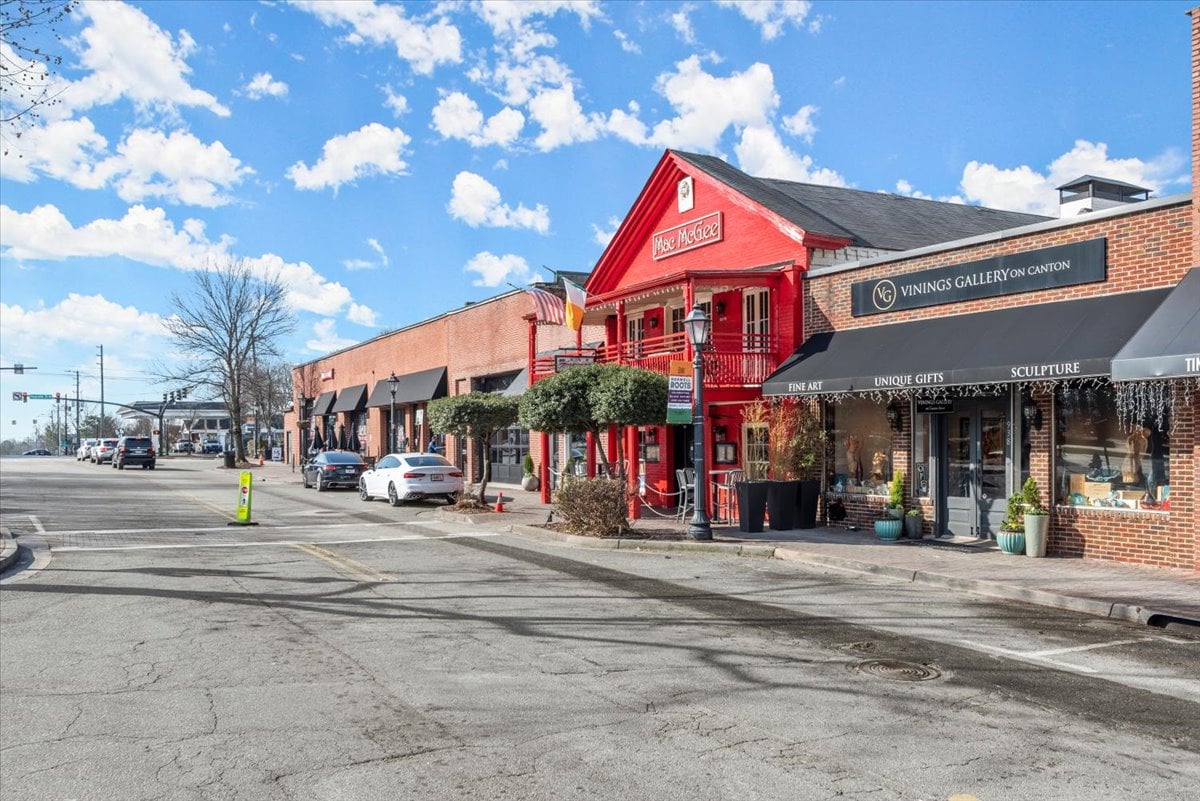
Add in the Saturday Farmers Market that already calls the City Hall lawn home, and what you get is a picture of a city whose community gathering habit was never actually concentrated in one park to begin with. Riverside Park was the biggest stage, and the most scenic one, sitting right on the river. But it was never the only stage, and the eighteen months of construction have made that obvious in a way that a fully open park never would have.
That's worth sitting with if you're the kind of resident who measures a neighborhood by whether it still feels like itself mid-construction. A city that loses its anchor venue and watches its total live music offerings hold steady, or arguably grow with Southern Post in the mix, is a city whose social infrastructure runs wider than any single piece of parkland. Riverside Park closing didn't test whether Roswell has a concert season. It tested whether that concert season depended on one building. It didn't.
What Comes Back in 2027
The reopening, targeted for summer 2027, brings back more than the old park. The redesign folds in the elements that were missing before: a proper events pavilion instead of an open lawn improvised for concerts, an upgraded stage and bandstand built for programming rather than retrofitted for it, and a sprayground and playground designed as destinations in their own right rather than afterthoughts. Riverside Sounds is on the city's calendar to return once that work wraps, which means the series comes back to a venue built to host it better than the old one did.
Until then, the fourth Saturday slot that Riverside Sounds used to occupy from April through September simply sits empty on the river, while the second Friday slot at City Hall does double duty. If you're new to the rhythm, that's the one worth putting on the calendar: 7 to 9 p.m., second Friday of the month, May through September, free, no tents allowed so everyone's sightline stays clear, and bring whatever food and drink you want since outside coolers are welcome.
The larger point isn't really about concerts. It's about what happens to a neighborhood's sense of itself when its most photographed piece of infrastructure goes offline for a year and a half. In Roswell's case, the answer is that not much changed, because the habit of gathering outdoors on a Friday night was never really about the river. It was about the city building enough places, Canton Street, City Hall, Southern Post, that closing one of them for repair barely registers on the calendar.
That kind of resilience doesn't show up in a listing description, but it's exactly the sort of detail that tells you something true about a place before you've decided to live there or after you already do. Roswell isn't waiting on Riverside Park to feel like Roswell again. It's just waiting on the pavilion.
If you're thinking about what a neighborhood like this looks like for your own next move, whether that's a family upgrading into more space near downtown or a relocation that wants walkable evenings built in, the Doug Harden Group spends its time exactly where these details live. Schedule a Private Consultation and let's talk about what Roswell, and the rest of North Atlanta, actually looks like day to day.