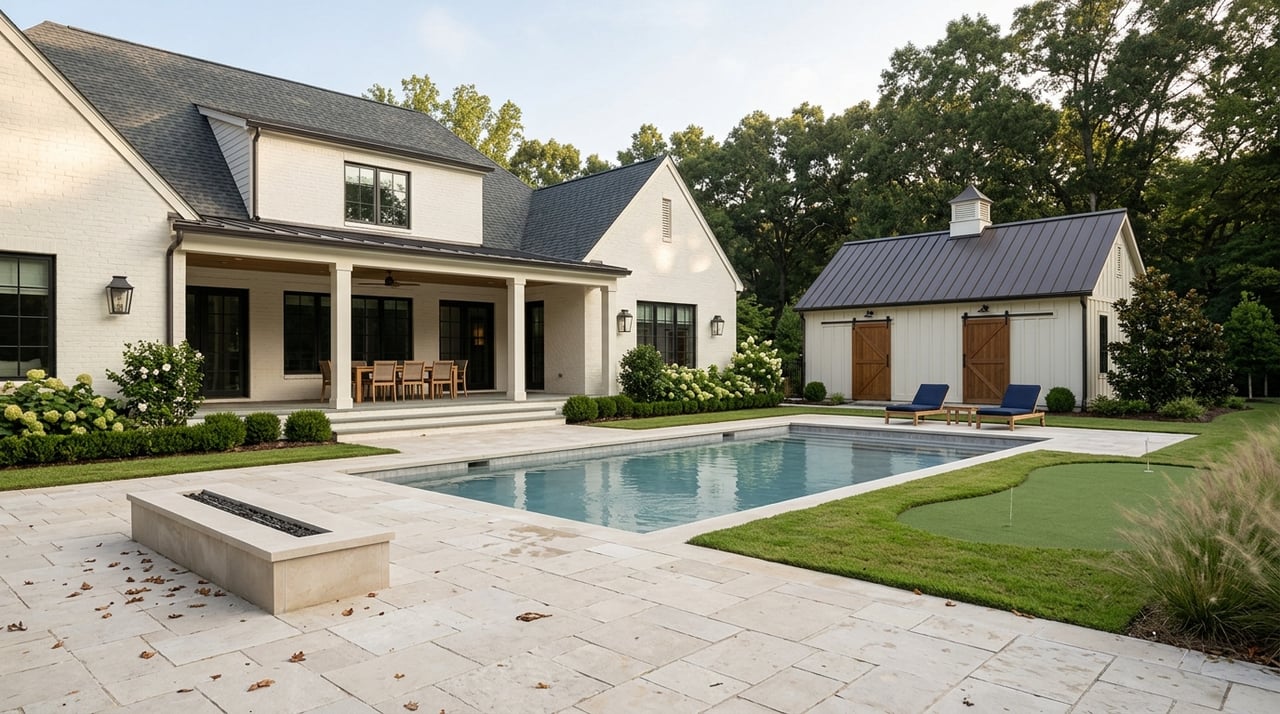
If you are drawn to a place where open space, private club life, and horse country all shape the day-to-day experience, Milton stands out. This is not a typical suburban setting, and that difference matters when you are deciding where and how you want to live. In this guide, you will get a clear look at what Milton’s golf and equestrian lifestyle really means on the ground, and why it continues to attract buyers who want both space and connection. Let’s dive in.
Why Milton Feels Different
Milton describes itself as rural but not remote, and that simple phrase explains a lot about the city’s appeal. The city was incorporated in 2006 from parts of unincorporated Fulton County, and about 85% of its more than 39 square miles is agriculturally zoned, which requires residential lots to be at least one acre.
That land-use pattern helps create a lower-density setting with more separation between homes and more room for larger properties, club campuses, barns, paddocks, and trail corridors. At the same time, Milton borders Roswell and Alpharetta, so you are not cut off from nearby shopping, dining, and business centers.
Golf in Milton Means More Than Golf
In Milton, golf is often tied to a broader club lifestyle rather than just a place to book a tee time. For many buyers, that distinction is important because the draw is not only the course itself, but also the social calendar, fitness options, dining, and everyday convenience that come with club-centered living.
Two of Milton’s best-known club communities make that lifestyle clear.
The Manor Club Lifestyle
The Manor Golf & Country Club pairs championship golf with a full private-club setting. The club features a Tom Watson-designed course along with private tennis and pickleball courts, a resort-style swimming pool, fitness, dining, a kids’ club, and year-round social events.
That combination appeals to households who want recreation and community in one place. Even if golf is only part of your routine, the added amenities can still play a major role in how you use the neighborhood and spend your time.
White Columns Club Living
White Columns Country Club offers another strong example of Milton’s club-oriented appeal. Its Tom Fazio-designed golf course is an 18-hole championship layout that stretches 7,053 yards and plays as a par 72, and the club also includes tennis and pickleball, swimming, fitness, dining, and a robust social calendar.
For buyers comparing neighborhoods, this kind of amenity package can shape daily life as much as the home itself. It can influence how you spend weekends, how you connect with neighbors, and how much activity is built into your immediate surroundings.
Public Space Still Reflects Golf History
Milton’s golf identity also shows up in a different way through public land. The city acquired the former Milton Country Club property in 2018 and transformed it into Milton City Park and Preserve, which now totals 137 acres with 7 active acres and 130 passive acres.
Today, the preserve includes a community center and trails. While it no longer functions as a golf club, the site’s earlier use still helps shape the landscape and the feel of the property.
Equestrian Life Is Part of Milton’s Identity
If you are wondering whether Milton’s horse-country reputation is real, the answer is yes. The city’s own Equestrian Community page highlights horse farms, agri-businesses, and the work of the Equestrian Committee, which is a formal city committee appointed by the mayor and council.
That matters because it shows equestrian culture is not treated as a niche hobby or branding theme. It is part of the city’s identity and part of how Milton presents itself to residents and visitors.
Horse Farms Are Woven Throughout Milton
Milton’s 2024 farm census found more than 200 active horse farms across the city. These farms are dispersed throughout Milton rather than concentrated in one small area, which helps explain why the equestrian presence feels visible in everyday life.
You do not have to seek out a single horse district to understand this part of Milton. The broader landscape, roadways, and land patterns all contribute to a setting where horse farms are an established part of the community fabric.
Public Trails Support the Lifestyle
Milton’s equestrian character is supported by public spaces as well as private properties. Birmingham Park is a 200-acre park in northwest Milton with nine natural surface trails used by equestrians and hikers, and the city has added horse-trailer turnaround space, hitching posts, connecting trails, and a water source for horses.
Freemanville-Birmingham Greenspace adds 21 acres of pasture-like terrain with fenced spaces and trailer access, and horses may be led or ridden there. These details show that the equestrian lifestyle in Milton is supported by real infrastructure, not just private land ownership.
Trails Help Preserve Milton’s Rural Feel
Milton’s Trails Advisory Committee states that its mission is to preserve the rural nature of the city through an all-encompassing trail network for walkers, bicyclists, and horse riders. That public commitment helps explain why trails are such an important part of the Milton experience.
For buyers, this adds another layer to lifestyle planning. If you value open-air recreation, a lower-density setting, and a city that actively supports connected trail access, Milton offers a distinctive mix.
What Daily Life Can Look Like
Milton’s golf and equestrian lifestyle is best understood as a blend of land, amenities, and routine. Some residents are drawn to club communities where golf, racquet sports, dining, and social events create a full weekly rhythm. Others are more focused on acreage, horse facilities, trail access, and the quiet that comes with larger homesites.
In many cases, buyers are drawn to both. That is one of Milton’s defining strengths. You can find a setting that feels spacious and grounded in rural heritage while still being near neighboring cities and established conveniences.
The city also brings this lifestyle into public view through community programming. For example, Milton hosts Meet the Neighbors at Freemanville-Birmingham Greenspace, where residents can interact with horses and connect with the local equestrian community.
Why Buyers Are Drawn to This Lifestyle
For many buyers, Milton offers a rare balance. You get the visual openness and breathing room created by one-acre minimum lots across much of the city, along with private club environments and a strong equestrian presence.
That balance can be especially appealing if you are relocating from a denser market or moving within North Atlanta for more space and a stronger lifestyle fit. Instead of choosing between a club environment and a more rural setting, Milton often allows you to explore both within the same market.
Here are a few reasons this lifestyle resonates with buyers:
- More space through larger lots and lower-density planning
- Club-centered living with golf, dining, fitness, swimming, and social events
- Authentic equestrian presence supported by farms, committees, parks, and events
- Access to nearby cities since Milton borders Alpharetta and Roswell
- A distinctive sense of place shaped by rural heritage and intentional land use
How to Think About Your Home Search
If Milton’s golf and equestrian lifestyle appeals to you, it helps to define what matters most before touring homes. Some buyers want a private club setting with golf and neighborhood amenities at the center of daily life. Others want usable land, a quieter setting, or proximity to equestrian resources and trail networks.
A focused search starts with the lifestyle questions behind the purchase. Your ideal fit may depend on how you prioritize lot size, community structure, amenity access, and the kind of environment you want around you every day.
That is where local insight matters. A neighborhood can look appealing on paper, but the right choice usually comes down to how well the home, setting, and lifestyle align with the way you actually plan to live.
If you are considering a move to Milton or comparing its lifestyle communities with other North Atlanta options, Harden Group can help you evaluate the details that matter most and build a strategy around the right fit.
FAQs
Is Milton, Georgia really known for an equestrian lifestyle?
- Yes. Milton’s 2024 farm census found more than 200 active horse farms, and the city also supports equestrian life through its Equestrian Committee, horse-friendly parks, and public events.
Is golf in Milton only for serious golfers?
- No. Milton’s private clubs are positioned as broader lifestyle hubs, with golf joined by dining, fitness, swimming, racquet sports, family programming, and social events.
Why do homes in Milton often feel more spread out?
- Milton says about 85% of its land is agriculturally zoned, and residential lots in those areas must be at least one acre, which helps create a more open, lower-density feel.
Are there public equestrian-friendly spaces in Milton?
- Yes. Birmingham Park and Freemanville-Birmingham Greenspace both include features that support horse use, including trails, trailer access, and horse-friendly infrastructure.
How close is Milton to Alpharetta and Roswell?
- Milton borders both Alpharetta and Roswell, which helps give you access to nearby city amenities while living in a more rural, spacious setting.